Traditional Villages In Flores: An Unforgettable Journey
The traditional villages in Flores are more than just pretty places to take pictures. These villages are important because they have kept the traditions of the megalithic rituals, traditional architecture, and ancestral stories that are often overlooked by many tourists visiting Indonesia. As you travel from the busy port of Labuan Bajo toward the highlands of Flores, you’ll discover how the local people have kept their culture alive for centuries through stone altars, conical roofs, and terraced courtyards.
Why Traditional Villages in Flores Matter
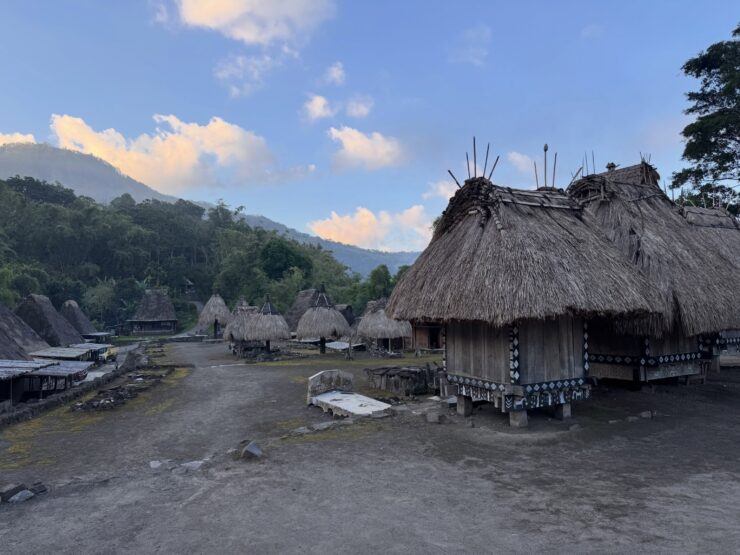
Flores Island is widely known for its Komodo dragons and rocky coastline. However, it is the traditional villages in Flores that preserve some of the island’s most profound cultural experiences. Scattered along mountain ridges and through fertile valleys, these communities maintain a way of life shaped by ancestral laws, communal rituals, and a deep connection to the land.
Instagram.com @robyvet86
For travelers seeking more than just a list of tourist attractions, exploring the traditional villages of Flores offers a rare glimpse into the indigenous belief systems, megalithic heritage, and communal life that continues to thrive despite the pressures of modernization. These places are not open-air museums, but living communities. You can witness how traditional ceremonies, weaving traditions, and oral history continue to actively shape daily life.
Bena Village: A Megalithic Time Capsule
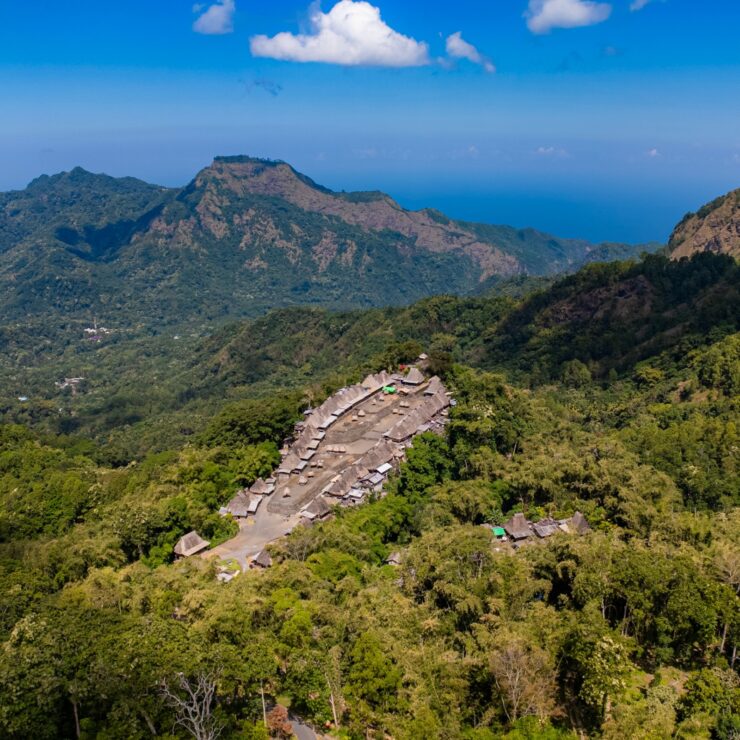
The village of Bena in Ngada Regency is one of the oldest and most famous traditional villages in Flores. Locals believe that this village preserves elements of a civilization that once existed during the Megalithic period. The village of Bena is built on a hill, with Mount Inerie as its backdrop.
Furthermore, the village has an oval layout and features stone altars and ancestral shrines. These elements form the foundation of the village’s spiritual life.
Instagram.com @mattjkel
The traditional houses are arranged to face inward. Their steep, pyramid-shaped roofs symbolically represent the clans and ancestral spirits.
In the center of the village lies a special area filled with megalithic stones. These stones are used during important community rituals, harvest celebrations, and ceremonies such as the Reba Festival. These ceremonies demonstrate the strong bond between the community and their land and ancestors.
Daily Life and Weaving Traditions in Bena
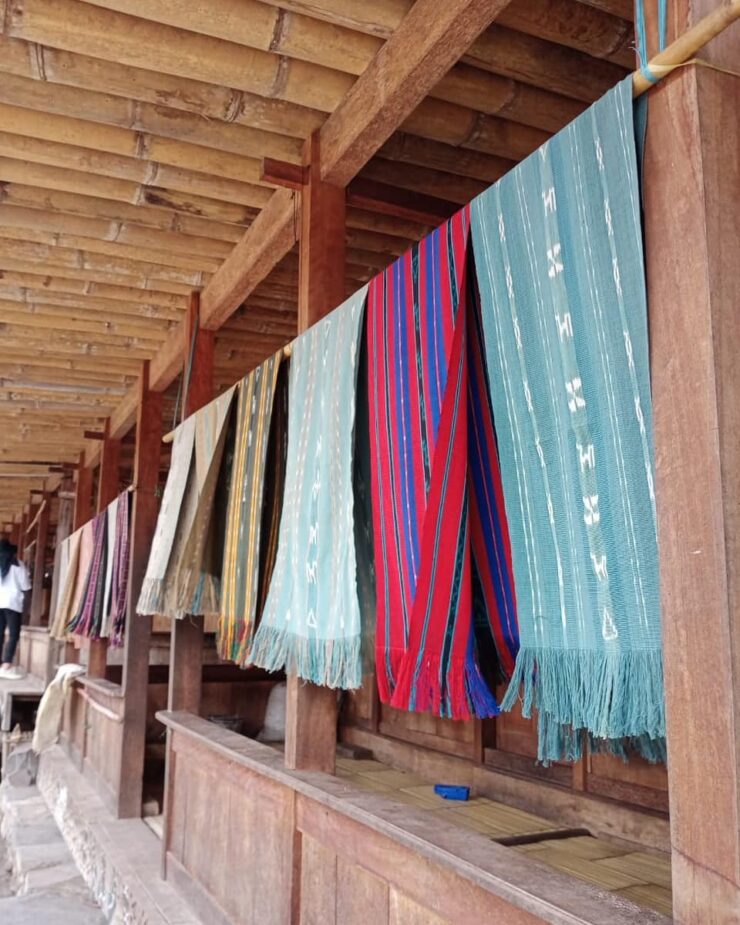
Life in Bena follows a peaceful rhythm, centered on farming and traditional weaving. Bena has become one of the most captivating traditional villages in Flores for travelers seeking an authentic cultural experience. The women often sit on their verandas working on intricate ikat weavings. Furthermore, each weaving motif contains layers of meaning tied to clan identity, origin myths, and protective symbols that have been carefully passed down from generation to generation.
Instagram.com @kataomed
You can purchase these handwoven pieces directly from the families who make them. Doing so generates vital income that helps preserve the village’s traditional houses and ceremonial rituals. As you walk among the stone altars and towering thatched roofs in this traditional village on Flores, it becomes clear that tourism is more than just passive observation. Tourism is a delicate collaboration in which respectful travelers play a role in preserving a fragile cultural ecosystem.
Wae Rebo: Village Above the Clouds
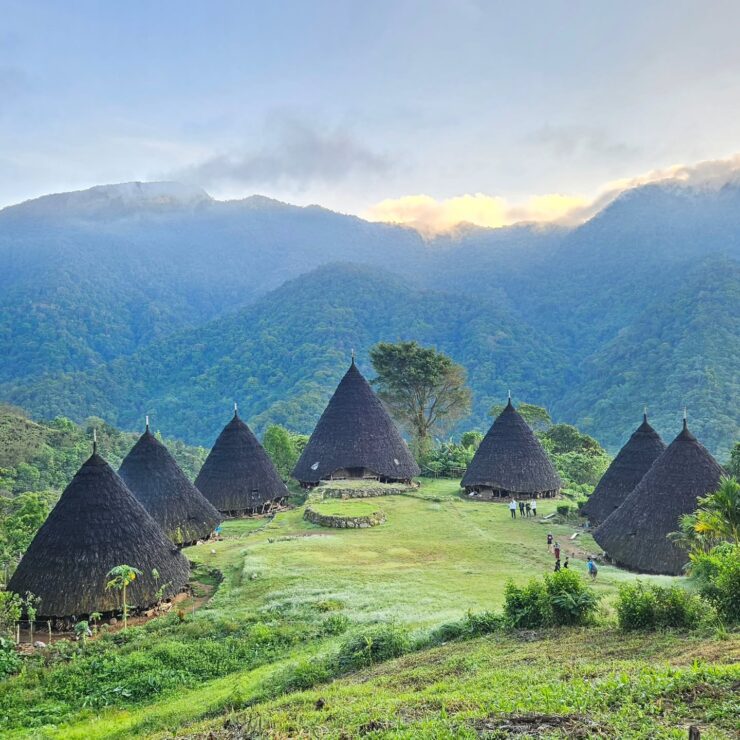
Perched high in the misty Manggarai highlands, Wae Rebo has captured the world’s attention as one of the most remote and enchanting traditional villages in Flores. It’s no wonder that Wae Rebo has become a must-visit destination for culture-loving travelers. Situated at an elevation of approximately 1,100–1,200 meters above sea level, this “village above the clouds” can only be reached by a 7-kilometer hike. The trek takes three to four hours and winds through dense forests and along steep, challenging yet rewarding slopes.
At the end of the trail, Wae Rebo appears as a circular open field filled with seven towering conical houses known as Mbaru Niang. These houses have gained international recognition for their distinctive architecture and deep cultural significance among the traditional villages of Flores. The village’s location is truly breathtaking, surrounded by mountains and often shrouded in mist. This further reinforces the feeling that you’ve entered a hidden world suspended between earth and sky. It’s no wonder that Wae Rebo stands out among the most iconic traditional villages in Flores.

Instagram.com @imascp
Inside the Mbaru Niang
Each Mbaru Niang looks like a simple cone from the outside, but inside it holds many stories. The different levels are used for different purposes, such as living quarters for the family or for storing crops and heirlooms.
One special house, the Mbaru Gendang, serves as the ceremonial center. This house holds sacred objects and plays a vital role in village rituals. These rituals honor ancestors and the spirits believed to protect the surrounding mountains.
Furthermore, the seven houses are arranged in a semicircle facing south. This symbolizes harmony between the community, nature, and supernatural forces. For those who spend a night in this traditional village in Flores, sleeping on woven mats beneath a steep thatched roof, sharing simple meals, and listening to stories by the light of a campfire can feel like a rare experience that immerses you in a way of life that has withstood homogenization.
Instagram.com @imascp
Beyond Bena and Wae Rebo
Traditional villages in Flores offer much more than just famous names like Bena and Wae Rebo. Furthermore, these villages are part of a broader cultural corridor, where each settlement has its own stories, architecture, and ancestral rituals. In places like Ruteng Pu’u near Ruteng, Gurusina in Jerebuu, and Wologai in Ende, you’ll find distinctive house designs, megalithic stone structures, and ritual spaces associated with specific ethnic groups and their origin myths. All of this makes these traditional villages in Flores ideal for travelers seeking a deeper cultural immersion.
Further east, communities such as Melo, Saga, Tololela, and Nggela reveal the layers of their traditional governance systems, communal houses for harvest celebrations, and spaces for dispute mediation. All of this demonstrates how adat, or customary law, continues to shape daily life. Together, these traditional villages in Flores transform every road trip you take on the island into a meaningful journey through a living cultural heritage landscape—not just a trip to enjoy the scenery.
More Than Just A Visit
Preserving local traditions isn’t just something to enjoy as a spectator. It requires you to go beyond simply checking off a list of places to visit and activities to do, and to truly immerse yourself in the traditional villages in Flores.
Here, every stone altar and conical roof is not only beautiful but also rich in meaning. This leads you to reflect on whether your presence has a positive or negative impact on what you’ve come to admire. The choice is clear: be just a passing trend or a conscious ally in ensuring the survival of traditional villages in Flores on their own terms.
Shoot us a message, we will reply it right away.
to find your perfect trip.